
# Stop Rebuilding What Already Exists: Teaching Artists Are Leading the Field
I am one of many. And we are done with waiting.
There is a familiar pattern emerging again in the Teaching Artist field.
Moments of confusion and chaos following funding shifts, institutional instability, and leadership transitions are often followed by a renewed desire to “listen,” “rebuild,” and “reimagine” how Teaching Artists are supported.
On the surface, this sounds promising.
But many of us have been here before. I’ve certainly been there and done that.
Since 2017, I have been working alongside a community of Teaching Artists through Teaching Artists of the Mid-Atlantic (TAMA). We have organized, advocated, built tools, gathered data, and supported one another in real time. We do not wait for permission, and we are creating without institutional backing. We are practiced in making a little go a very long way.
Organizations like TAMA must be at the center of the conversation about Teaching Artists. Yet time and again, we find ourselves positioned just outside of it.
# We are not waiting for permission. We are building without institutional backing.
# The Cycle We Need to Name
The cycle in this field that too often goes unspoken:
- Teaching Artists are asked to share their experiences.
- We are invited into conversations framed as listening sessions.
- We offer insight, history, strategy, and solutions.
- Decisions are made elsewhere.
- Frameworks are built without us.
- Resources are released that replicate or overlook what already exists.
What remains is not progress, but exhaustion.
That exhaustion is not accidental. It is reinforced by persistent patterns and strategies—intentional or not—such as the divide-and-conquer dynamics within the arts ecosystem that keep Teaching Artists fragmented and unable to mobilize collective power.
# What remains is not progress, but exhaustion.
I will speak more directly about this in a future post. Because this is not a failure of passion or commitment on the part of Teaching Artists. Teaching Artists are deeply invested in building an equitable and sustainable field. Many have done the hard work of building full-time careers, myself included, through innovation, collaboration, and extraordinary stamina, despite ongoing narratives that question our ability to navigate the system, our expertise as professionals, and our commitment to the work.
What we have here is quite simply a failure of structure, power, and recognition.
# We Have Been Building All Along
While institutions pause to reassess, networks that are by and for Teaching Artists have continued to build.
At TAMA, that has meant:
- Establishing Principles that reflect the realities of our field.
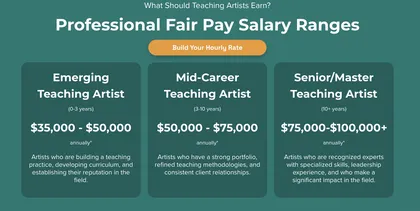
- Developing fair pay salary ranges and a fair pay builder that accounts for our businesses and programming costs, including planning, travel, and other hidden labor, not just contact hours.
- Creating tools and programs shaped by active Teaching Artists, helping contractors see themselves as small businesses.
- Advocating at the national level for recognition of “Teaching Artist” as an occupation.
This work is not theoretical. It is lived, tested, and evolving in real time. And it is happening inside strong, dedicated communities designed by and for Teaching Artists networks.
# We Know What Real Partnership Looks Like
Not all relationships in this field have been extractive.
We have experienced true partnership under previous leadership at the National Guild for Community Arts Education, where transparency, trust, and alignment made meaningful collaboration possible. That leadership recognized TAMA’s work and actively encouraged our participation in national conversations. Most notably, we were invited to participate in conversations regarding the lack of recognition for “Teaching Artist” in the U.S. Department of Labor’s Standard Occupational Classification system.
That encouragement mattered.
It contributed to TAMA submitting our own national recommendation, supported by over 200 endorsements from across the country. This work was led by Teaching Artists, for Teaching Artists.
That is what allyship looks like:
- Not speaking or creating for us, but ensuring we are in the room, advancing our occupation.
- Not duplicating our work, but amplifying how we speak about our profession.
The loss of that kind of leadership is felt deeply and reinforces something we have come to understand clearly: Teaching Artists cannot rely on institutions to carry this work forward.
We must build, advocate, and exert our own collective power, because the occupation, the arts ecosystem, and our communities depend on it.
# The Cost of Being Central but Unsupported
Teaching Artist labor is central to arts learning in communities, but it remains undervalued.
- Large systems depend on it.
- Thousands of artists sustain it.
- Students of all ages experience its impact every day.
And still, the artists at the center remain the least protected.
We have data. We have research. We have decades of lived experience. What we have not had is alignment between that knowledge and the structures that govern funding, employment, and decision-making.
At a certain point, continuing to “discover” the same problem without shifting power begins to feel less like inquiry and more like avoidance. As someone who has existed in this work for 30+ years, Teaching Artists should be the drivers of their occupation, not seated in the back seat, or worse, as hitchhikers outside conversations where decisions about funding, programs, and training are made for us, not with us.
That hasn't led to transformation, just wasted time.
# Teaching Artists should be the drivers of their occupation, not hitchhikers outside the conversation.
# We Do Not Have a Training Problem
Over the years, there have been calls for more formalized certification or degree programs for Teaching Artists. Most recently by Emil J. Kang, here. Kang raises important points, but here is where I take issue:
Teaching Artists do not have a certification or training problem.
We have a system that refuses to pay for the existing training.
Teaching Artists come to this work with:
- Degrees and conservatory training
- Years of artistic practice
- Extensive experience in classrooms and community settings
- Participation in professional development programs, workshops, and apprenticeships
What we do have is a compensation problem.
Adding more certifications does not solve that. It often deepens inequity by asking artists to invest additional time, money, and labor into credentials not tied to increased pay, stability, or protection.
I know this firsthand: earning an MFA did not lead to higher compensation for me. It did not create more sustainable working conditions. It did not shift the structures that determine how Teaching Artists are valued. I am not alone in this story.
# We do not have a certification or training problem. We have a compensation problem.
Before asking Teaching Artists to pursue additional training and credentials, we must first ensure the field can sustain the artists already here. Otherwise, we are asking people to invest in a profession that is not yet investing in them. With decades of experience and hearing stories from my colleagues, I interrogate these systems of trainings and certification for Teaching Artists, and wonder, who are they created by, and ultimately, who benefits from them?
# The Skills Are Already There
I want to elaborate on training a bit more. Teaching Artistry is a complex, adaptive practice that lives between organizations. It requires:
- Deep artistic expertise
- The ability to design and adjust curriculum in real time
- Emotional intelligence and relationship-building
- Classroom management across diverse and unpredictable environments
- Training that extends far beyond the arts including safety, accessibility, and first aid
Artists develop skills for the environments and processes they choose to work in. A musical theatre tap dancer may only use their tap training here and there in productions. A fight choreographer or intimacy director may appear onstage in a production in a role and join the creative team, applying their specialized skills when called upon. A playwright or director intensely researches specific dramaturgical content that pertains to one script or production. Teaching Artists exist within the arts ecosystem and engage in an artistic process similar to that of all artists. It is ambiguous. It is intentional if they are professional. Their technique development and training unfold, and expertise is called upon in response to real communities, real conditions, and real needs.
When I began working with elders, I recognized that my artistic or teaching training alone was not enough. I needed to know first aid and where the nearest defibrillator was before starting residencies. This is not art or teaching training, but an essential requirement of the work if you are a professional. Creating a safe space for participants to be vulnerable is the work.
There is more to say about safety, care, and the unseen training, labor, and our process of Teaching Artistry, and it’s a topic I will return to in future posts. Follow me to learn about what my colleagues and I envision for the future of Teaching Artists, its training, its compensation, its work, and who is leading it. I’ll be talking about an occupation that is Teaching Artist-led.
# Stop Starting From Scratch
The field is not lacking trained artists. What it lacks is recognition, compensation, and structures that support the work already being done.
There is a tendency to approach each transition as if we are beginning again. We are not.
Teaching Artist networks carry the history of:
- Mergers that happened without transparency
- Resources created without long-term sustainability
- Initiatives that demanded our time and insight without returning it
- Programs that garnered long-term benefits of our ideas without compensation
- Actions that challenged and harmed the equity work by and for Teaching Artists organizations were doing
And still, Teaching Artists have continued to build.
That's why I'm restarting this blog.
Because I am not interested in restarting this cycle. I hope to arm colleagues who have not yet learned about TAMA's work with the information that activates their active participation. It is clear that the work to advance our occupation is within our own community.
# What Real Support Looks Like
If national institutions and local arts organizations are serious about supporting Teaching Artists, the path forward is clear:
- Uplift and amplify by-and-for Teaching Artist-led initiatives
- Invest in fair pay structures that reflect the full scope of our labor and recognize Teaching Artists as small businesses
- Follow the leadership of those actively working in the field
- Build infrastructure that supports artists, not just programs
- Support By-and-For Teaching Artists organizations with a donation
This is not about creating something new. It is about recognizing what is already here and choosing to support it.
# We Are Not Waiting Anymore
Teaching Artists have always been central to arts learning—locally, nationally, and globally.
We have built relationships, classrooms, and community spaces, often with little stability and even less recognition. We have done this work because it matters.
But care for the work should not require the artist to subsidize the program with their income or well-being, or to compromise their family.
Arts organizations, funders, and policymakers must step up, or continue perpetuating a cycle that triangulates artists, suppresses equity, and stalls progress.
The question is not whether Teaching Artists are ready.
The question is whether the arts ecosystem is ready to catch up.
# The question is not whether Teaching Artists are ready. The question is whether the field is ready to catch up.
Read More
Who Gets to Define Teaching Artistry?
Building on Beyond Membership, this essay asks what collective power looks like in practice. It argues that professional infrastructure from pay tools to standards and governance should be created with, governed by, and accountable to Teaching Artists. TAMA's Fair Pay Rate Builder is presented not simply as a calculator, but as one step toward Teaching Artists defining and governing their own profession.
Beyond Membership
Building from Divide and Conquer: Why Teaching Artists Struggle to Mobilize Collectively, this essay explores what comes after recognizing fragmentation: building power. Through reflections on membership, labor organizing, and Teaching Artist-led infrastructure, it examines why connection alone is not enough to change systems. The work ahead is not creating new knowledge—it is creating the structures, resources, and shared power needed to act on what Teaching Artists already know.
Divide and Conquer, Part 2
In part 2, I further examine how fragmentation in Teaching Artistry is built into systems of pay, contracting, classification, and training. I argue that this requires structural clarity, shared standards, and enforceable systems that reflect the full scope of Teaching Artist labor.
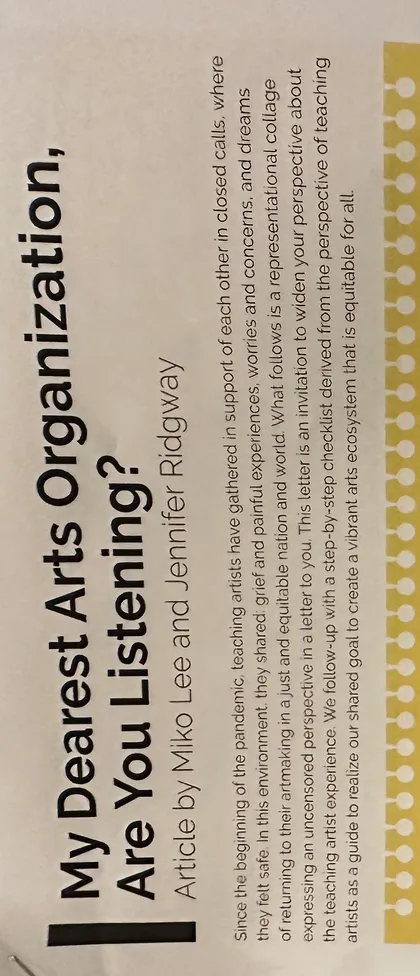
Divide and Conquer: Why Teaching Artists Struggle to Mobilize Collectively
The field shapes Teaching Artists through structural fragmentation across geography, disciplines, employment systems, and institutional access. These overlapping systems produce uneven value, scarcity, and separation between “inside” and “outside” positions, limiting connection and hindering collective organizing. With collective commitment, Teaching Artists can move from fragmentation toward power.

The Hidden Labor of Teaching Artists
This piece exposes the full scope of Teaching Artist labor. Before, between, during, and after the visible moment of a session, and how most of it goes uncompensated. This invisibility is not accidental, but structural, with artists absorbing the cost of sustaining programs. The result is a system that depends on hidden labor while failing to fully recognize or resource the professionals doing the work.
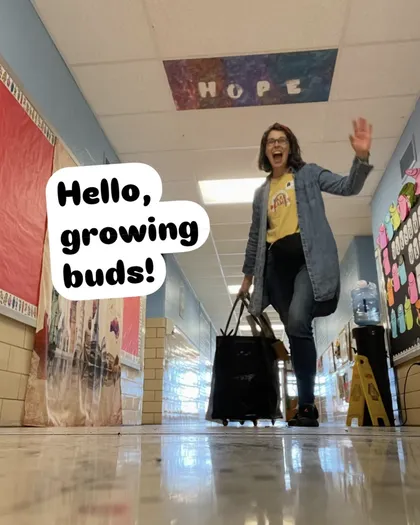
Stop Training Teaching Artists. Start Paying Them.
Teaching Artists are often told the solution is more training. We are missing the real issues: a lack of compensation, trust, and power-sharing with artists. Teaching Artists know what the work demands, and when they have felt valued and supported in doing their best work.

Outside the Gate: A Story About Excellence in Teaching Artistry
This personal reflection traces my journey as a Teaching Artist working outside what is traditionally considered “respected” theatre. It asks a central question: if the work has always been excellent, why have our systems struggled to recognize, resource, and value it?
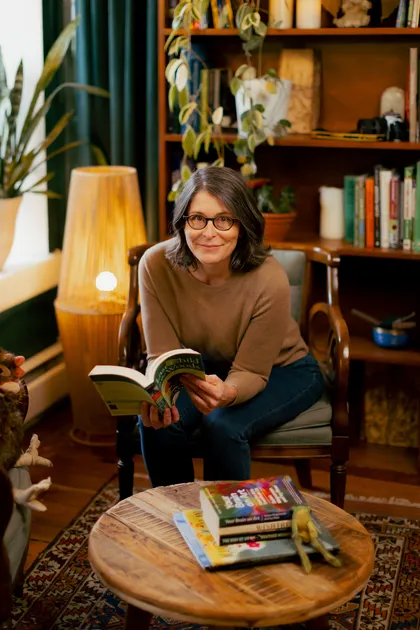
We Don’t Have a Training Problem. We Have a Pay Problem.
This follow-up builds on the growing conversation sparked by my recent post. It clarifies what’s at stake for Teaching Artists and lays the groundwork for a series of deeper explorations into fair pay, hidden labor, systemic barriers, and what it will take to move from dialogue to action.